
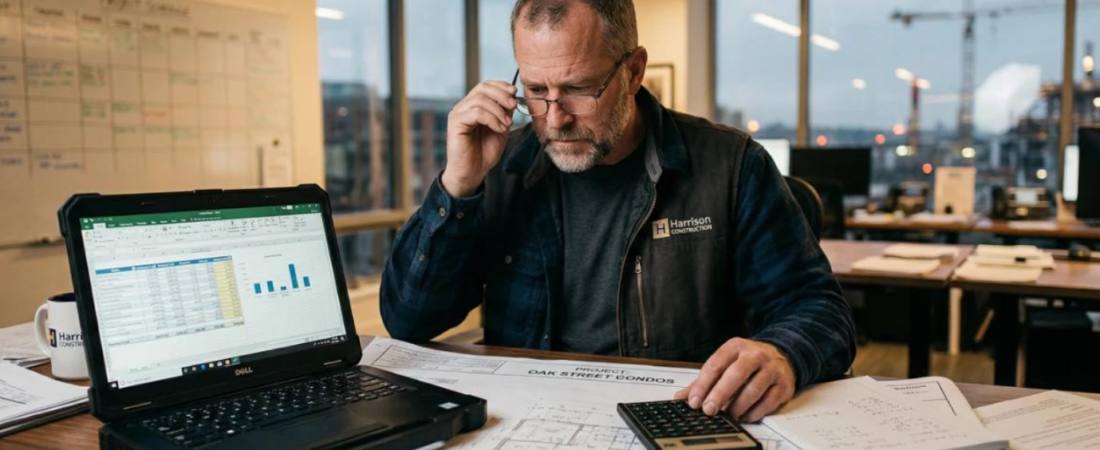
Your Construction Business Is Busy. So Why Is There No Money Left?
You have projects underway. Your crews are working, subcontractors are on site, materials are being delivered, and invoices are going out.
From the outside, your construction business looks busy.
But when it is time to pay suppliers, cover payroll, or prepare for the next project, the money in the bank does not seem to reflect all the work you have completed.
If this sounds familiar, you are not alone. Being busy does not automatically mean your construction business is profitable or that you have enough cash available.
The challenge is understanding where the money is going, what each project is actually costing, and what cash your business can expect in the weeks ahead.
1. Revenue Does Not Tell the Whole Story
A large contract can look attractive when you sign it. But the contract amount alone does not tell you how much money your business will keep.
Consider a simple example.
You take on a construction project with a contract value of $200,000. Your original estimate puts the project’s costs at $160,000, leaving a projected gross profit of $40,000 before other business expenses.
As the project progresses, labor takes longer than expected, material prices change, and additional work affects the schedule. Your estimated project costs increase to $175,000.
Your projected gross profit is now $25,000 instead of $40,000.
The project is still moving forward. You may even be receiving payments. But the financial picture has changed.
This is why contractors need to look beyond contract values and revenue. They need to compare the original budget with actual costs and what it will realistically cost to finish the work.
2. Know What Each Project Is Really Costing You
When expenses are recorded only at the overall business level, it becomes harder to understand which projects are performing well and which need attention.
Project-level cost tracking, often called job costing, helps connect expenses to the work that generated them.
Depending on the project, this may include:
- Labor and related labor costs
- Materials and equipment
- Subcontractor invoices
- Purchase orders and committed costs
- Approved change orders and additional work
- Remaining costs needed to complete the project
The important step is not simply recording expenses. It is reviewing them against the project budget.
Ask yourself: How much have we spent? How much have we committed to spend? What work remains? Are we still on track with the original cost estimate?
These questions can help you recognize cost overruns before the project is finished and the final numbers are in.
3. Watch the Timing of Money Coming In and Going Out
Profit and cash flow are related, but they are not the same.
A project may be profitable on paper while your business is short on available cash. You may have completed work that has not yet been paid for, while payroll, suppliers, insurance, and other expenses still need to be covered.
That timing gap matters.
To improve your visibility, keep track of:
- Customer invoices issued and payments expected
- Overdue accounts receivable
- Upcoming payroll, supplier, and subcontractor payments
- Retainage or other amounts being withheld
- Major expenses expected in the coming weeks
A simple cash flow forecast can help you compare expected receipts with upcoming obligations. Review it regularly and update it when payment dates, project schedules, or costs change.
The purpose is not to predict every detail perfectly. It is to identify potential shortfalls early enough to consider your options.
4. Do Not Let Unresolved Change Orders Distort the Picture
Construction projects change. A customer may request additional work, the scope may be revised, or site conditions may require adjustments.
But when the work moves ahead before the cost and approval are properly documented, your financial records may no longer reflect the actual project situation.
For every change, consider three questions:
Has the additional work been documented? Keep a clear record of what changed and why.
Have the costs been evaluated? Consider the additional labor, materials, subcontractor work, equipment, and schedule impact.
Has the financial forecast been updated? The project budget and expected cost to complete should reflect the latest information.
Unapproved or unpriced additional work can expose your business to financial risk. Clear documentation and timely review help you understand what is committed, what is approved, and what remains uncertain.
5. Create a Regular Financial and Project Review
You do not have to wait until month-end, project completion, or tax season to ask whether your business is on track.
A regular review can bring your financial information and project activity together.
Start with these questions:
- Which projects are above or below budget?
- Have estimated costs increased since the last review?
- Are invoices being issued in line with completed work and contract requirements?
- Which customer payments are overdue?
- What major expenses are coming due?
- How much cash is expected to be available after those obligations?
- What needs attention before the next review?
The answers can help you decide where to follow up, which costs need closer monitoring, and whether a project forecast needs to be revised.
The process does not need to be complicated. It needs to be consistent, based on reliable information, and useful for making decisions.
A Busy Construction Business Needs Financial Visibility
Running a construction business involves much more than winning projects and keeping work moving. You also need to understand the financial position behind those projects.
When costs, commitments, billing, collections, and forecasts are reviewed together, you have a clearer basis for deciding what needs attention.
You may discover that a cash shortage is primarily a timing issue. You may find that a project is costing more than expected. Or you may identify gaps in the way expenses and project information are being tracked.
Each situation requires a different response. The first step is being able to see what is happening.
Need a Clearer Picture of Your Construction Business?
At AnneLu Financial & Business Solutions, we support contractors and growing businesses with financial reporting, project cost controls, and operational support to help them better understand their numbers and make informed business decisions.
With 17+ years of experience across construction, finance, and project controls, we understand the importance of connecting financial information with what is happening on the ground.
If you would like to discuss your business finances, project costs, or operational processes, we welcome the opportunity to learn about your needs and explore whether our services are the right fit.
Schedule a Consultation. There is no obligation to proceed.
Good decisions start with knowing where you stand.
This article is for general informational purposes only. The appropriate financial, accounting, and contractual practices depend on your business and project circumstances.